How to Draw Pictionary Phrases: 30 Scene Prompts and Tips
Learn how to draw Pictionary phrases with 30 scene prompts, visual planning tips and fair ways to play multi-word drawing rounds.
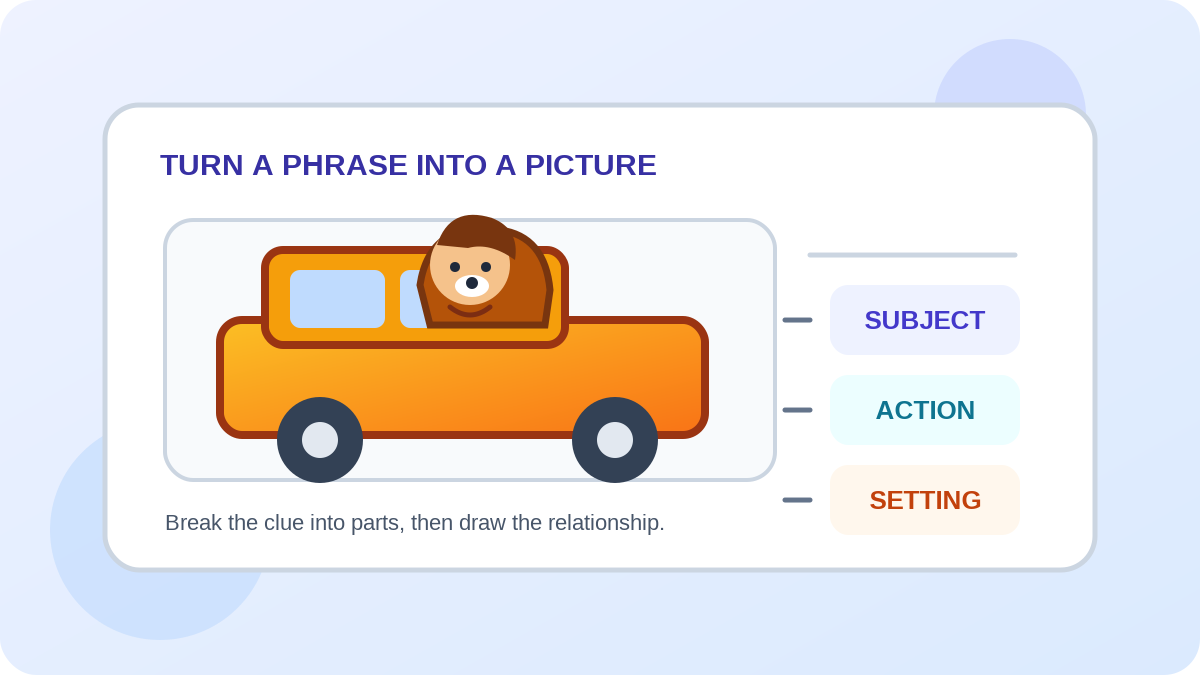
A multi-word Pictionary clue can be harder than a single word because the artist must communicate more than one idea. A phrase such as “a dog driving a bus” includes a subject, an action, and an object. The fastest way to draw it is not to sketch every detail. It is to decide which parts make the phrase recognizable, then put those parts on the page in a clear order.
This guide explains how to draw Pictionary phrases with a simple method, 30 scene prompts to practice, and practical ways to keep each phrase round fair. It focuses on drawing technique rather than generating a random list; use the Pictionary phrase generator when you want a fresh multi-word clue.
A simple method for drawing a Pictionary phrase
Before drawing, silently break the phrase into three parts:
- Subject: Who or what is the main focus?
- Action or relationship: What is happening?
- Setting or extra detail: What makes this scene different from a simpler clue?
For “a penguin on vacation,” the subject is a penguin, the action is relaxing or traveling, and the setting may be a beach or suitcase. You do not need to draw a realistic penguin. A small bird shape, flippers, sunglasses, and a beach umbrella may be enough.
Draw the most useful clue first
Start with the part that narrows the answer. If the phrase is “a cat playing piano,” draw a cat shape and a keyboard. If the phrase is “a sandwich on a mountain,” show the sandwich and a mountain peak. Avoid spending the whole round on decoration.
Use position and size to show relationships
A phrase often depends on how two objects relate to each other. Put the smaller object inside, beside, above, or behind the larger one. Arrows can help show movement if your group allows them. Keep the scene uncluttered so the team can focus on the important clues.
Use symbols carefully
A clock can suggest time, a heart can suggest love, and a question mark can suggest confusion. Symbols are useful for abstract ideas, but too many can make a drawing difficult to interpret. Agree on the rules for symbols, letters, and numbers before playing.
30 Pictionary phrase prompts to practice
These examples are designed to create a small scene. A host can use them as practice clues or adapt them to the group’s difficulty level.
Easy scenes
- A dog wearing a hat
- A cat in a box
- A bird eating a sandwich
- A fish riding a bicycle
- A rabbit holding a balloon
- A robot watering flowers
- A turtle crossing the road
- A monkey eating ice cream
- A penguin on a beach
- A bear riding a scooter
For an easy phrase, the artist can draw the main subject and one extra object. Keep the action simple and avoid adding too many characters.
Medium scenes
- A chef cooking on a camping stove
- A firefighter rescuing a kitten
- A pirate searching for treasure
- A teacher riding a skateboard
- A giraffe looking through a window
- A dinosaur waiting for a bus
- A musician playing in the rain
- A family building a snowman
- A photographer chasing a butterfly
- A rocket landing in a garden
Medium prompts work well when the artist needs to show an action or setting. A few lines can suggest movement, weather, or a location without drawing every detail.
Challenging scenes
- A magician losing a rabbit
- A spaceship delivering pizza
- A detective following footprints
- A lighthouse during a storm
- A chef serving dinner to a dragon
- A mountain climber carrying a birthday cake
- A clock chasing a calendar
- A snowman looking for summer
- A suitcase escaping from an airport
- A superhero stuck in traffic
For a challenging clue, choose one clear visual metaphor. “A clock chasing a calendar” can be shown with a clock and calendar pages moving away from it. “A snowman looking for summer” might show a snowman beside a sun and a beach umbrella. The idea is to communicate the relationship, not to illustrate every word literally.
How to keep phrase rounds fair
Match the phrase to the time limit
A short phrase with two concrete objects may work in 45 or 60 seconds. A longer scene with an abstract relationship may need more time. If the game uses one timer for every team, keep prompts at a similar level of complexity.
Keep phrases familiar
A phrase should be understandable to the group. Avoid obscure references, unfamiliar names, or jokes that only one team knows. If the group includes children, use simple subjects and everyday actions.
Do not make every phrase a trick question
A surprising scene can be funny, but it should still be drawable. “A dog wearing a hat” is unusual but clear. A phrase that depends on a complicated pun may be impossible to represent fairly.
Give every artist the same kind of challenge
If one team gets a simple two-part phrase and another gets a long abstract scene, the round may feel uneven. Sort prompts by difficulty or let teams draw from the same set.
Single words versus Pictionary phrases
Single words are useful for quick turns and beginners. Phrases create a fuller scene and can make a game more creative, but they usually need more planning. A balanced game can alternate formats: begin with single words, move to short phrases, and finish with a few challenging scenes.
If your group is new to drawing games, start with easy Pictionary words. If the players want more complex clues, use the hard Pictionary word collection. The Pictionary rules guide covers setup, scoring, and common house-rule choices.
A quick phrase-drawing checklist
Before the timer starts, think through these questions:
- What is the main subject?
- Which action or relationship makes the phrase unique?
- What one extra object or setting will help the team guess?
- Can the drawing be understood without letters or spoken hints?
- Is there a simpler way to show the same idea?
You may not need all five steps for an easy prompt. With practice, the artist will learn to identify the most useful visual clues quickly.
Frequently asked questions
What makes a good Pictionary phrase?
A good phrase creates a scene that can be shown with a few recognizable objects or actions. It should be familiar enough for the group to guess and specific enough to be interesting.
Are phrases harder than single Pictionary words?
Often, yes. A phrase may contain a subject, an action, and a setting, so the artist has more information to communicate. Short phrases can still be easy if the objects are familiar.
How long should a phrase round last?
A 60-second round is a useful starting point for many casual groups. Give longer scenes more time if everyone agrees, and keep the time limit consistent between teams.
Where can I generate more phrase prompts?
Use the Pictionary phrase generator to create multi-word drawing clues. You can also prepare a batch with the Pictionary word list generator.
Try a phrase round
Choose a short scene, draw its main subject first, and add only the details that help the team identify the action or relationship. When you are ready for a new clue, open the Pictionary phrase generator and create another multi-word prompt.
Three ways to show a relationship between objects
A phrase is often defined by the relationship between its parts. Use the page to show that relationship clearly:
- Action: Draw a subject doing something. In “a teacher riding a skateboard,” the person and skateboard matter more than the background.
- Location: Place one object inside or beside another. For “a cat in a box,” the box outline and the cat’s ears may be enough.
- Unexpected combination: Put two familiar things together. For “a spaceship delivering pizza,” draw the spaceship first, then a pizza box or delivery bag.
If the phrase includes a feeling or idea, use a recognizable situation rather than writing a symbol or word. For example, “a snowman looking for summer” can show a snowman beside a bright sun and a beach umbrella.
Common mistakes when drawing a phrase
Drawing too many details
A crowded drawing can hide the important clue. Start with the subject and the action. Add a setting only if it helps distinguish the phrase from another possible answer.
Treating every word as equally important
Some words are connectors, not the main clue. In “a dog sleeping under a table,” the dog and table may be enough; the artist can show the sleeping action with a curled body or a small pillow.
Starting with the background
A large background can use up the time before the team understands the main idea. Draw the key subject first, then add the location or secondary object.
Choosing an inside joke
A phrase that depends on one person’s private experience is not fair for a mixed group. Choose scenes that can be understood without knowing the artist’s personal life or specialist interests.
Practice phrase drawing in short rounds
A useful practice session does not need to be long. Choose three easy phrases, three medium phrases, and one challenging scene. Give each artist the same amount of time. After each turn, ask which part of the drawing helped the team guess and which detail could have been left out.
This reflection helps artists become more selective. The goal is not to draw faster by rushing; it is to communicate more clearly with fewer marks. Players can also switch between single words and phrases to keep the game varied. The easy Pictionary collection is useful for warm-ups, while the hard word collection offers more challenging ideas.
A prompt-writing checklist for hosts
When creating your own phrase cards, check that each prompt:
- Has a clear subject.
- Includes an action, location, or unusual relationship.
- Can be represented without writing letters or numbers.
- Is familiar enough for the people playing.
- Has a similar level of complexity to the other prompts in its round.
If a phrase takes a full sentence to explain, it may be too complicated for a timed drawing game. Shorten it until the important visual idea is clear.
Use the phrase tool for a fresh round
When you have practiced the examples above, generate a new multi-word clue with the Pictionary phrase generator. For a mixed game, combine phrase rounds with single-word prompts from the main Pictionary word generator. Keep the difficulty balanced, rotate the artist, and let the drawing—not a long explanation—do the work.