The Ultimate Pictionary Rules Guide: How to Play, Score, and Win
Learn how to play Pictionary, set up teams, use drawing clues, keep time, score rounds, and agree on fair house rules for a fun game night.
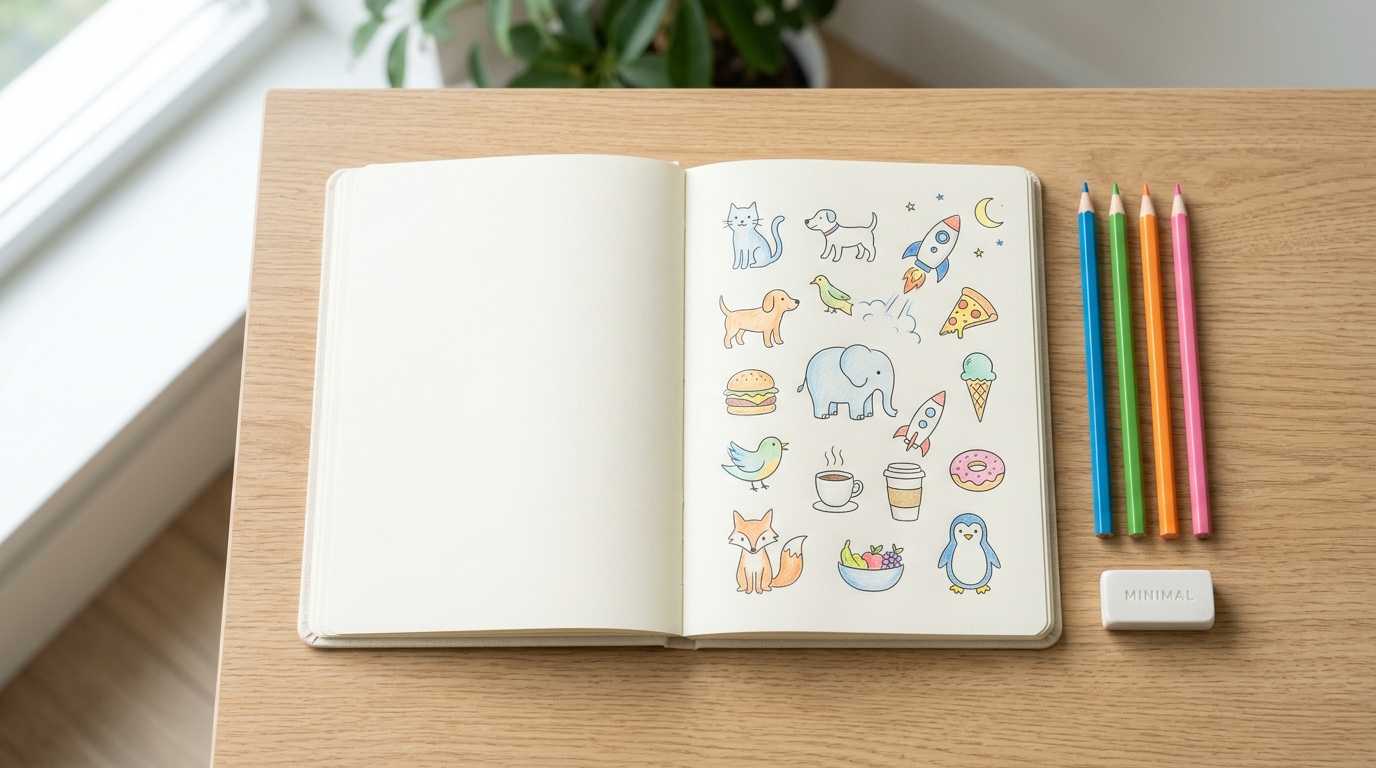
Pictionary is a drawing-and-guessing party game: one person sketches a secret word or phrase while teammates try to identify it before time runs out. The fun comes from communicating an idea without simply saying it. A neat drawing is not required; a few clear shapes, symbols, and visual clues can be enough.
This guide explains a practical way to organise a game, run a fair round, keep score, and handle common disagreements. Pictionary editions and house rules can differ, so treat the steps below as a friendly framework. If you are using a boxed edition, its rulebook takes priority for edition-specific details.
The goal of the game
Players work in teams. During a turn, one player becomes the drawer and receives a word or phrase. The drawer communicates only through pictures, and their teammates call out guesses. A team earns progress or points when it identifies the prompt within the agreed time.
You can play toward a finish line, such as reaching a target score, or simply play a set number of rounds and compare totals. Before starting, tell everyone which format you are using. This small decision prevents confusion later.
What you need
- Words or prompt cards: Use a boxed game’s cards or a word generator. Choose a difficulty that suits the group.
- A drawing surface: Paper, a flip chart, a whiteboard, or a tablet works.
- Markers or pencils: Thick, dark lines are easier for a group to see.
- A timer: Sixty seconds is a popular house-rule choice, but agree on the duration before play.
- A scorekeeper: One player can track points, turns, and any bonus rules.
If you are playing remotely, use a shared whiteboard or hold the drawing surface up to the camera. Make sure the artist does not accidentally reveal the prompt in a chat message or on screen.
Set up teams
Divide the group into two or more teams with a reasonably even number of players. With a large group, three teams can reduce waiting time. With only three or four people, pairs can take turns drawing and guessing.
Choose the first drawer for each team. Rotate the role so that confident artists do not draw every turn. Pictionary is about communicating ideas, not artistic skill, and giving everyone a chance makes the game more welcoming.
Agree on these details before the first prompt:
- How long does each turn last?
- Does a correct guess earn one point, a move on a board, or both?
- Can teams pass on a prompt?
- Are spelling clues and gestures prohibited?
- What happens if time expires just as someone guesses?
There is no need to debate every possible edge case. A quick shared agreement is usually enough.
How a turn works
1. Select a prompt. The drawer receives a word or phrase without showing it to teammates. A host can prepare a list, shuffle cards, or use an online generator.
2. Start the timer. Begin only when the drawer is ready and the team can see the drawing surface.
3. Draw the idea. The artist uses pictures, symbols, shapes, and visual relationships. They should not write the answer or speak clues if the group has chosen standard no-talking rules.
4. Let teammates guess. Teammates can call out as many guesses as they like. The drawer can continue adding clues, changing the drawing, or making a clearer visual connection.
5. Stop the round. If the team guesses correctly before time expires, record the point or follow the agreed board rule. If time runs out, reveal the answer and move to the next team.
A host should keep the pace friendly. If a rule is unclear, pause briefly, make a consistent decision, and apply the same decision to later turns.
Drawing rules that keep the game fair
Many groups use a simple rule: communicate with pictures, not written or spoken answers. Common restrictions include:
- No letters or words: Do not write the prompt, initials, or a sentence that gives it away.
- No numbers as spelling clues: Avoid writing digits to represent letters or syllables. If your group allows numbers for quantities, define that exception first.
- No talking or sound effects: The artist should not say, sing, hum, whistle, or imitate the sound of the answer.
- No acting it out: Keep the clue on the drawing surface rather than using charades-style body movements.
- No pointing to objects in the room: A real clock, window, or pet should not become part of the clue unless your house rules explicitly allow it.
Some editions and groups use additional restrictions or permitted signals. Check the instructions for your version and make sure everyone knows the boundaries before the game begins.
Can the drawer use gestures?
This is one of the most common sources of disagreement. Some groups allow a small set of non-verbal signals, while others insist that all clues must be drawn. There is no universal house rule that every casual group follows.
A simple option is to prohibit gestures entirely. Another is to allow neutral signals such as indicating that the team is close, provided the signal does not spell, mime, or directly reveal the answer. Choose one approach and apply it consistently.
If a player accidentally gestures, avoid turning the round into an argument. The host can give a reminder, decide whether the turn continues, and use the same standard for everyone.
Time limits and passing
A one-minute turn is easy to understand and keeps a party moving. Shorter turns create pressure; longer turns can help children or beginners. You can also use different time limits by difficulty, but announce them before the prompt is shown.
Passing is useful when a word is unfamiliar, unsuitable for the group, or simply not producing a fair challenge. Decide whether a pass costs a turn, loses a point, or has no penalty. For a relaxed family game, allowing one free pass per team can keep the mood positive.
Scoring options
There are several ways to score. Pick one rather than mixing systems halfway through:
- Simple points: Give one point for each correct answer before time expires.
- Round wins: Award a point to the team that solves the prompt first.
- Board movement: Move a marker when a team succeeds, following the board game’s instructions if you are using one.
- Timed challenge: Play a fixed number of rounds and award a point for each solved prompt.
If you add bonus points for difficult words or quick answers, keep the bonus small and explain it in advance. A clear scoring system is more important than a complicated one.
What is an All Play round?
Some board-game formats include rounds where more than one team draws or guesses at the same time. These are often called All Play rounds. The exact procedure and reward depend on the edition, so follow the printed instructions if you have the board game.
For a homemade version, give every team the same prompt, start all timers together, and award the round to the first team that correctly identifies it. Keep the drawings separate so one team cannot copy another team’s work.
Tips for artists
- Start with the main object. Draw the most recognisable part first rather than filling the page with decoration.
- Use size and position. A tiny person beside a huge building can communicate scale; an arrow can show movement or direction.
- Break a phrase into parts. For a compound word, sketch each component and then show how they connect.
- Use familiar symbols. A sun, clock, heart, speech bubble, or simple map shape can communicate an idea quickly.
- Change approach when stuck. Cross out an unhelpful sketch and try a different visual clue.
- Keep the page uncluttered. Too many details can make a simple idea harder to recognise.
The goal is not to make a beautiful illustration. It is to help teammates recognise the idea under time pressure.
Tips for guessers
Watch the drawing as it develops instead of waiting for a finished picture. Call out likely categories, objects, actions, and related words. If the artist draws a person, a ladder, and a roof, for example, think about jobs, building work, or a location rather than focusing on the individual objects alone.
Avoid shouting dozens of unrelated guesses over one another. One person can suggest a category while another offers specific possibilities. Most importantly, keep guesses friendly: the artist is trying to communicate, not taking an art exam.
Make the game work for children and mixed ages
For younger players, choose familiar objects, animals, foods, and actions. Give extra time if reading or drawing is still developing. Let children practise a sample round before keeping score.
For mixed-age groups, use teams with different ages rather than putting all younger players together. You can also create easy and challenging prompt piles, allowing each team to choose a level. Avoid prompts that depend on private knowledge or cultural references that some players may not recognise.
Try these related lists for prompt ideas: easy Pictionary words, Pictionary words for kids, and animal Pictionary words.
Common problems and fair solutions
The answer is technically close but not exact. Decide whether plural forms, common synonyms, or minor wording differences count. For a casual game, accepting an obvious equivalent can keep play moving.
The artist writes a letter by mistake. Give a reminder and decide whether the round continues. Do not create a harsher penalty for one team than another.
The prompt is unfamiliar. Allow the agreed pass option or replace it with a prompt at the same difficulty.
Two people shout the answer at once. If they are on the same team, count it as a correct guess. If different teams are involved in an All Play round, use the host’s agreed tie-break rule.
A drawing is difficult to see. Pause the timer briefly if the surface or marker fails, then continue. Equipment problems should not decide the result.
Frequently asked questions
How long should a Pictionary turn last?
One minute is a common casual choice. You can shorten it for experienced players or extend it for younger children. Agree on the limit before play.
Can you use arrows in Pictionary?
Many groups allow arrows because they show direction or a relationship. If your group treats arrows as symbols that are too revealing, set that restriction before the game.
Can you draw a number?
Rules vary by edition and house style. Many groups prohibit numbers when they are used as written clues. Decide whether ordinary quantities are allowed and apply the rule consistently.
What happens when nobody guesses correctly?
Reveal the prompt, award no point under a simple scoring system, and move on. If you are using a board game, follow its instructions for an unsuccessful turn.
Does the best artist always win?
No. Quick visual thinking and teamwork often matter more than realistic drawing. Simple symbols can be more effective than detailed artwork.
Final checklist for the host
Before starting, prepare prompts, divide teams, choose a timer, explain the drawing restrictions, and select a scoring method. During play, rotate drawers, keep decisions consistent, and resolve disputes quickly. After a few rounds, adjust the difficulty if the game feels too easy or too frustrating.
For more challenging prompts, explore hard Pictionary words and our hard-word drawing challenge. If you want a ready-made mix for a party, browse fun Pictionary words for game night.
The best Pictionary night is not the one with the strictest referee. It is the one where everyone understands the rules, gets a turn, and enjoys trying to turn a tricky idea into a picture.