Top 25 Hard Pictionary Words That Challenge Even the Best Artists
Try 25 challenging Pictionary words, from abstract ideas to tricky phrases, with practical drawing clues and tips for making tough prompts guessable.
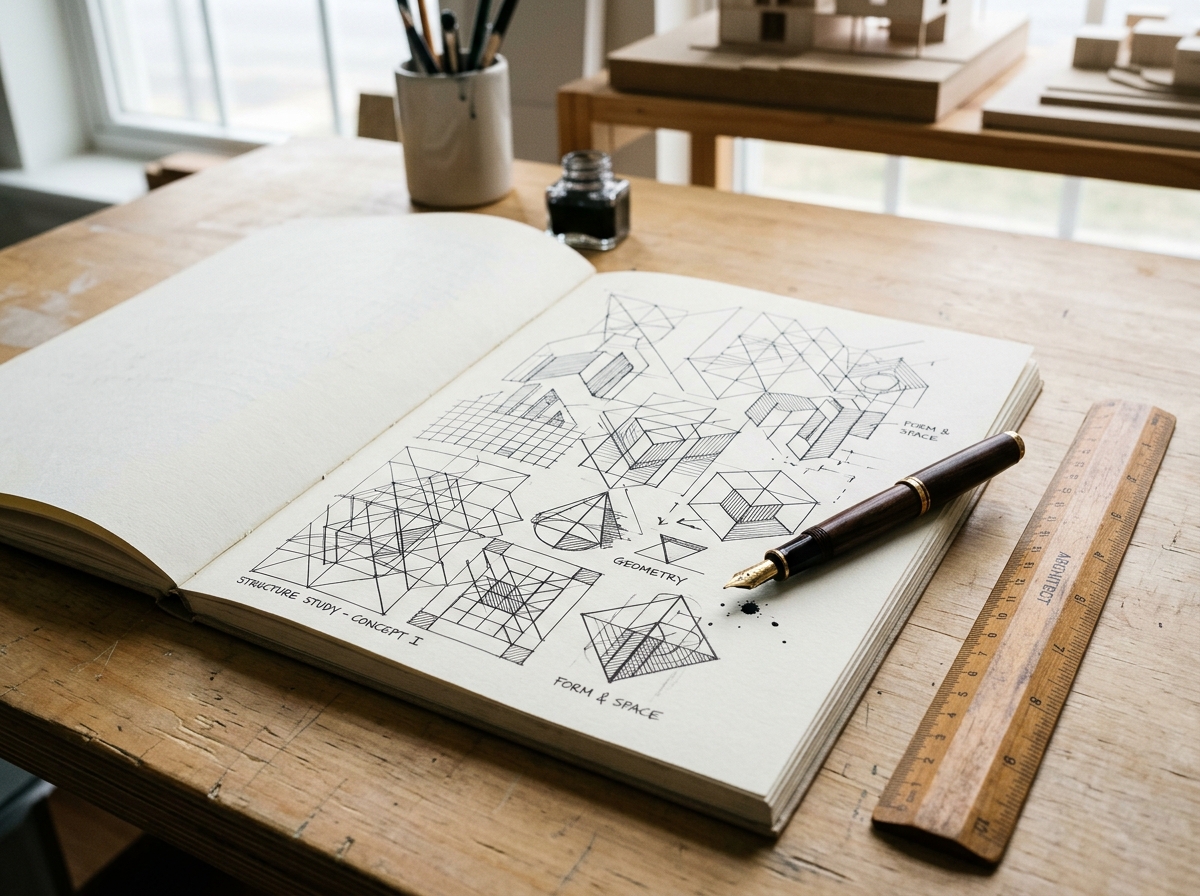
Anyone can draw a house, an apple, or a cat. The real challenge begins when the prompt is an abstract idea, an unfamiliar process, or a phrase that cannot be shown as one simple object. Words such as “procrastination” and “parallel universe” ask players to turn meaning into a visual clue.
The aim of a hard Pictionary round is not to make the prompt impossible. It is to make it challenging but fair. These 25 ideas include a drawing approach for each one, plus ways to adjust the difficulty for different groups.
25 challenging Pictionary words and drawing ideas
1. Déjà vu
Draw a person walking through a doorway, then sketch the same person and doorway again beside it. Add a circular arrow to suggest that the moment feels repeated. Keep the repeated scene obvious rather than filling the page with detail.
2. Time travel
Draw a clock or hourglass with a large arrow curling backwards. You could also show a dinosaur standing beside a modern astronaut. The contrast between two time periods helps teammates connect the clues.
3. Claustrophobia
Sketch a small stick figure between two tall walls. Add arrows pointing inward and a worried expression. The tight space is the key clue; avoid drawing so many objects that the walls become difficult to notice.
4. Procrastination
Draw a calendar with an important task marked for today. Beside it, show a person relaxing while a stack of unfinished work grows. A clock and an approaching deadline can reinforce the idea without writing the answer.
5. Parallel universe
Draw two side-by-side versions of the same scene. In one, a person walks a dog; in the other, the dog walks the person. A mirror line or two matching doorways can suggest alternate realities.
6. Schrödinger’s cat
Draw a closed box, a cat silhouette, and a large question mark. To show uncertainty, add two small thought bubbles: one with a happy cat and one with a sleepy or surprised cat. This is a specialist prompt, so use it with a group likely to know the reference.
7. Gravity
Sketch a person dropping an apple, with the apple falling toward the ground. Add a second object falling in the same direction. The shared downward movement communicates the force more clearly than a complicated scientific diagram.
8. Jealousy
Draw two people looking at the same trophy or gift. Give one person a frustrated expression while the other holds the prize. A green-eyed monster is another familiar visual metaphor, but facial expressions may be easier for some players.
9. Nostalgia
Draw an adult looking at an old toy, photograph, or childhood home. Add a small heart or a soft thought bubble showing the same object from the past. The combination of memory and affection suggests the emotion.
10. Inflation
Draw a shopping basket beside a price tag that rises from a small amount to a much larger one. Add a coin purse with fewer coins. Use the visual contrast between rising prices and reduced buying power.
11. Hypnosis
Sketch a pair of eyes looking at a swinging pocket watch. Add curved motion lines around the watch and a relaxed face. Avoid relying only on a spiral; the person watching it makes the clue more specific.
12. Ecosystem
Draw a pond or forest with plants, an insect, a bird, and a larger animal. Use arrows to show how the living things connect. The idea is a network of organisms sharing one environment.
13. Insomnia
Draw a person lying awake in bed while a clock shows a late hour. Add open eyes, a moon outside the window, and a stack of pillows. The scene should communicate being unable to sleep rather than simply going to bed.
14. Democracy
Sketch a group of people placing papers into a ballot box. Add a simple line of people waiting to vote. The action of choosing together is more recognisable than drawing a government building alone.
15. Magnetism
Draw two magnets with opposite ends facing each other and small metal objects moving toward one. If you want to show repulsion instead, draw matching ends pushing apart with arrows. Keep the poles visually distinct.
16. camouflage
Draw an animal partly hidden among leaves, rocks, or snow. Make its outline blend into the background, but leave enough of the animal visible for teammates to identify the idea. A chameleon can be a useful starting point.
17. Metamorphosis
Show a caterpillar on one side and a butterfly on the other, with an arrow between them. A sequence of three simple stages can communicate transformation more clearly than one elaborate drawing.
18. Hypocrisy
Draw a person pointing at someone else while doing the same thing themselves. For example, show a character complaining about litter while dropping a wrapper. The contrast between words and actions is the main clue.
19. Earthquake
Sketch a row of buildings with wavy ground lines underneath. Add a tilted lamp or cracked road to show shaking. Avoid making the whole drawing look like an ordinary storm.
20. Artificial intelligence
Draw a computer or robot head with a small network of connected nodes inside. Add a person asking a question on a screen. The combination of machine and information processing can suggest the concept.
21. Optical illusion
Draw a simple shape that can be seen in two ways, such as a cube with ambiguous front and back edges. Add two eyes looking at it. Keep the design simple enough that teammates can focus on the trick.
22. Renewable energy
Draw a wind turbine, a solar panel, and a sun. Add arrows from the natural sources toward a light bulb or home. If the group is unfamiliar with the phrase, showing more than one source can help.
23. Peer pressure
Sketch one person standing apart while a small group points toward an activity. Use body posture to show the person feeling unsure. The social influence is more important than the specific activity.
24. Overpopulation
Draw a crowded bus, train, or city street with people packed closely together. Add a row of apartment buildings in the background. Make the crowd the main visual feature.
25. Quantum physics
Draw a tiny atom-like symbol beside a question mark and a magnifying glass. You might show several possible paths or states branching from one point. This is deliberately difficult and works best as an expert-level prompt.
How to draw abstract words
Abstract prompts become easier when you stop trying to draw the word literally. Instead, ask what a person might see, do, feel, or associate with the concept.
Use a short visual story. For “procrastination,” the story is a task that should be done now but keeps getting delayed. Three pictures—a calendar, a relaxed person, and unfinished work—can communicate that sequence.
Show cause and effect. For “gravity,” draw an object falling. For “inflation,” show prices rising while the same amount of money buys less. A relationship between two objects is often more useful than a single symbol.
Use contrast. Before and after, large and small, full and empty, or past and present can make a complicated idea visible. Contrast is especially useful for words such as “metamorphosis,” “nostalgia,” and “parallel universe.”
Break compound words into parts. A word such as “overpopulation” can be split into “too many” and “people.” “Renewable energy” can be shown as a natural source feeding a useful device. Do not write the components; draw them.
Choose recognisable symbols. A ballot box, hourglass, magnet, wind turbine, or bed can quickly establish a category. Then add one clue that makes the prompt more specific.
Make hard rounds challenging but fair
A good difficult prompt should have a possible visual route. If nobody in the group knows a specialist reference, the round may test trivia rather than drawing skill. Mix abstract ideas with familiar scientific, social, and everyday concepts.
Try these ways to balance a round:
- Give beginners a familiar hard word such as gravity, insomnia, or earthquake.
- Save specialist terms such as Schrödinger’s cat and quantum physics for experienced players.
- Use a consistent timer for every team.
- Allow the same number of passes for each team.
- Avoid prompts that depend on private jokes or knowledge held by only one player.
- Rotate drawers so the same person is not always responsible for the hardest word.
You can also prepare separate easy, medium, and hard piles. Let teams choose a pile before seeing the prompt, and decide whether harder piles earn extra points. If you use bonus points, keep the scoring simple enough to remember.
A simple strategy for the artist
When the timer starts, take a moment to identify the most important part of the meaning. Do not try to draw every detail. Begin with the strongest symbol, then add context if teammates need more information.
For a difficult phrase, think in this order:
- Category: Is it a person, place, object, feeling, action, or scientific idea?
- Main clue: What one image is most strongly associated with it?
- Relationship: Does the clue involve change, comparison, cause, direction, or a sequence?
- Backup clue: What second image could make the meaning clearer?
If the first approach is not working, cross it out and switch to a different association. A fresh visual idea is often more helpful than adding more detail to a confusing drawing.
A strategy for teammates
Guess the category before guessing the exact word. If you see a person, a clock, and a calendar, consider time-related ideas. If you see a group, a ballot box, and a queue, think about voting or public decisions.
Listen to the guesses already made. Repeating the same wrong answer does not help, but a near miss can reveal which part of the drawing teammates understand. The artist can then add a clue that distinguishes the intended word from a similar one.
Keep guesses moving without talking over every teammate. A team that shares ideas clearly may solve a difficult prompt faster than a team that shouts random words.
More prompt lists to practise with
If these words are too difficult for a family game, start with easy Pictionary words or Pictionary words for kids. For themed rounds, try action words, nature and weather prompts, and jobs and professions.
For a wider mix of party prompts, read 50 fun Pictionary words for game night. If you are organising a group, our Pictionary rules guide explains teams, timing, scoring, and fair-play agreements.
Frequently asked questions
What makes a Pictionary word hard?
Words are usually harder when they are abstract, unfamiliar, or difficult to represent with one recognisable object. Emotions, scientific concepts, social ideas, and multi-word phrases often require a visual story.
Are abstract words good for Pictionary?
Yes, if the players have enough shared knowledge to understand the concept. Pair very abstract prompts with familiar ones so the game stays challenging without becoming frustrating.
How can I draw a feeling?
Show a person, their expression, and a situation that communicates the emotion. You can use familiar visual metaphors, but a short scene may be clearer than a symbol alone.
Should difficult words earn more points?
That is an optional house rule. If you use it, tell all teams the scoring before play and make sure the difficult prompt categories are reasonably balanced.
What if nobody knows the answer?
Reveal the word, discuss a possible drawing clue, and move on. If a prompt repeatedly causes confusion, remove it from the list or reserve it for a group that knows the reference.
Turn difficult prompts into memorable rounds
The best hard words encourage players to think visually, work together, and laugh at unexpected interpretations. Start with a strong symbol, add a relationship or short story, and keep the drawing simple. A difficult prompt should stretch the team’s creativity—not make the rules feel unfair.
Choose a balanced set of words, agree on timing and passes, and rotate the artist. With a little preparation, even abstract concepts can become entertaining drawing challenges.